What Happens After Stump Grinding: Chips, Settling, Replanting
The grinder is the short part of the job; the next two years of the spot are what most people never get told about.
October 7, 2026 · 4 min read
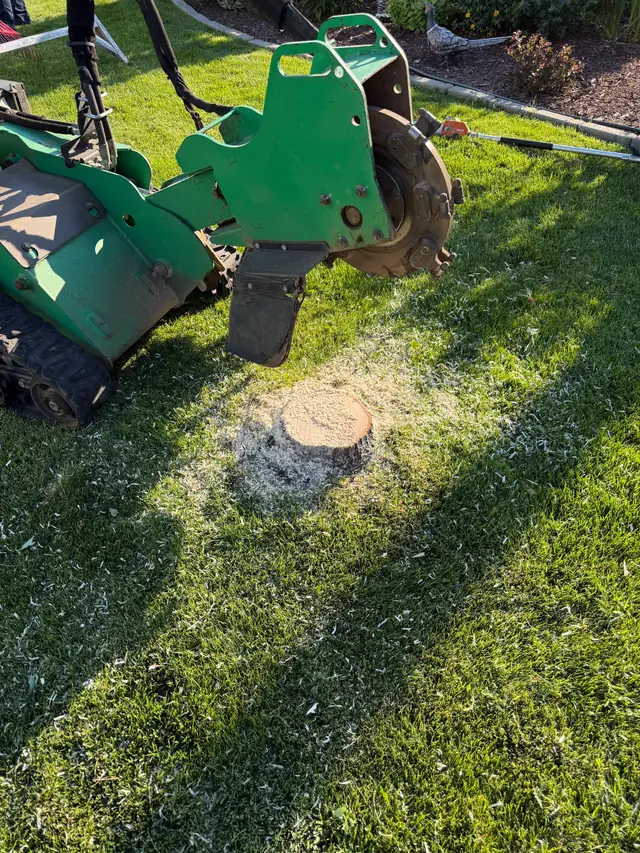
The stump is gone. In its place is a pile of fresh wood chips and a patch of torn-up lawn, and plenty of homeowners are left wondering what comes next. Here's the whole sequence, from the grinder to a lawn you can mow.
How the grind works
A stump grinder has a spinning wheel studded with carbide teeth. The operator swings that wheel back and forth across the stump, taking it down a few inches at a time, until it's well below the soil line. West Valley Tree Service works with a track grinder, a machine built for uneven ground that can often get through a side gate and across a lawn.
How deep it goes depends on what comes next. For a lawn, a few inches below the surface is plenty, since soil and grass will cover it. If you plan to plant a shrub or tree right there, say so, because that calls for grinding deeper and chasing out more of the larger roots. The grinder also throws chips sideways as it works, so cars, windows and patio furniture within range should be moved or covered first.
Before the wheel touches anything, it matters what's under the ground. Tell the crew where your sprinkler lines, drip irrigation and any buried utility lines run. A grinder takes a stump down well below the surface, and that's exactly where those lines live.
Where the chips go
Grinding turns the stump into chips and sawdust, and the pile is usually bigger than the stump was, because loose chips take more room than solid wood. Decide before the work starts what you want done with them. The usual choices:
- Raked back into the hole, which fills the depression and leaves a low mound that settles over time.
- Hauled away, which leaves an open hole you'll fill with topsoil.
- Used as mulch in a garden bed or around shrubs, kept a few inches back from stems and trunks.
If you plan to seed the spot, hauling most of the chips away makes the next step much easier.
Why the spot settles
Chips and the roots left underneath break down, and as they do the ground above sinks. Over a year or two it can drop by several inches if the chips were left in a deep hole. That's normal, not a mistake. Top it up with soil once or twice and level it off.
A low spot is easier to fix than a mound. If the chips were raked back in, expect to add soil a little at a time over the first two years, rather than all at once, so the grass that's already growing isn't buried.
Fresh chips also pull nitrogen out of the soil as they rot. Grass seeded straight into a layer of chips usually comes up thin and yellow, which is the second reason to remove the top layer before you seed.
The roots left behind
Grinding takes out the stump and the top of the root flare, not the whole root system. The rest stays in the ground and rots slowly. Most of the time you'll never notice it. A few kinds of trees send up suckers from leftover roots, and if you see small shoots coming up around the old spot, cut them off at the ground as they appear. Large roots running along the surface that would trip a mower or lift a patio can be chased out and ground too, which is worth bringing up when you get the estimate.
Replanting or seeding
For a lawn, take most of the chips out of the top layer, fill with clean topsoil, rake it level, then seed or lay sod. In Yakima's dry summers, new seed needs steady, light watering until it's up, and one hot week without water can undo the whole job.
For a new tree, pick a spot a few feet from the old one if you can. The old root mass and the chip bed make poor soil for a few seasons. If it has to go in the same place, dig out the chips and replace them with real soil first.
For a garden bed, the same rule applies: soil in, chips out, and plant into ground that will still hold together in two years.
Before you call
A photo of the stump, a count of how many there are, where the fences and gates are and anything buried is all an estimate needs. Stump grinding is offered alongside tree removal, so a tree and its stump can be quoted together. Call or text Carlos at (509) 961-5496 for a free estimate.
West Valley Tree Service LLC, (509) 961-5496
Call (509) 961-5496More articles
Natural-Look Pruning vs. Topping: What Your Tree Needs
A tree cut back to stubs looks tidy for a season and costs you for a decade; here is the cut that keeps it healthy.
Signs a Tree Near Your House Needs to Come Down
Most trees that fail near a house gave warning first; here is what to look for and what it usually means.