Natural-Look Pruning vs. Topping: What Your Tree Needs
A tree cut back to stubs looks tidy for a season and costs you for a decade; here is the cut that keeps it healthy.
October 7, 2026 · 4 min read
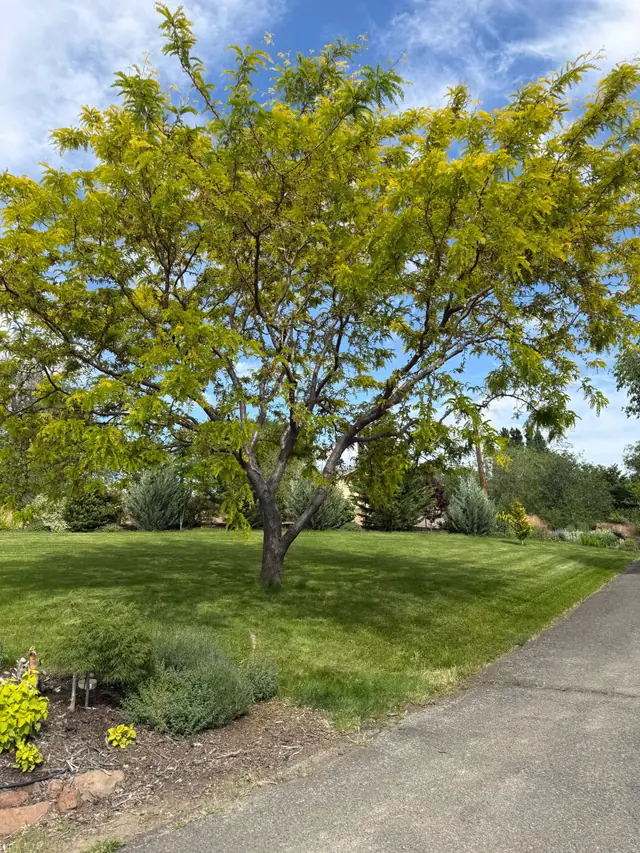
Drive around the West Valley in late winter and you'll spot them: shade trees cut back to a ring of blunt stubs, every main limb sawed off at the same height. Somebody called that a trim. The tree would call it an injury, and it will spend the next decade paying for it.
What topping does to a tree
Topping means cutting large limbs back to stubs, usually somewhere between branches, with no thought for which side branch could take over as the new tip. It's popular because it's quick and it makes the tree small right away. It's also one of the hardest things you can do to a mature tree.
A tree feeds itself through its leaves. Take away most of the crown in one afternoon and the tree is suddenly short on food, so it throws out a thicket of fast shoots just below each cut. Those shoots, called watersprouts, are anchored only in the outer layers of the limb instead of growing from deep inside it. A few summers later they're long, heavy and weakly attached, and they snap in wind far more easily than the branches that were removed.
The stubs are a second problem. A tree seals a wound best when the cut sits right at a branch collar. A flat cut across the middle of a big limb leaves a wide wound with nothing to close around, and rot can work in and travel down the limb. The sun adds a third: a crown stripped of its leaves no longer shades its own bark, and thin bark can scald in a hot, dry Yakima summer.
Why people top trees anyway
Usually for a good reason. The tree is crowding the roof, blocking a view, dropping limbs on the driveway or growing toward a power line. Topping looks like the fast answer, and for about two summers it seems to work. Then the regrowth arrives, thicker and faster than the original, and the tree needs attention again. Now it needs it more often, and the new growth is the dangerous kind.
If a tree is too big for its spot, the honest answers are a proper reduction or, sometimes, taking it out and planting something that fits. Topping is neither of those.
What a natural-look prune does instead
West Valley Tree Service labels its before-and-after work a “natural look prune,” and the goal is exactly what the name says: when the crew drives away, the tree should look like nobody touched it, only lighter and healthier. A good prune works through the tree in order:
- Dead, broken, crossing and rubbing branches come out first, because they're the ones most likely to cause trouble.
- A few interior branches are thinned so light and wind can pass through the crown, which takes load off the limbs.
- A limb that's too long is shortened by cutting back to a side branch large enough to take over as the new tip, so the tree keeps its shape and there's no stub.
- Low branches over a driveway, walk or roof are raised by removing them cleanly where they meet the trunk.
- The cutting stops well short of removing a quarter of the living crown in a single season, so the tree isn't shocked.
The cut that matters most
Every branch grows out of a swollen ring where it meets the trunk or a larger limb, called the branch collar. That's where the tree's sealing tissue lives. A good removal cut goes just outside the collar: not flush with the trunk, which wounds the tree, and not several inches out, which leaves a stub that dies back. Big limbs get cut in stages, an undercut first, then a top cut farther out, then the final cut at the collar, so the weight doesn't tear a strip of bark down the trunk on its way off.
None of this is flashy, and from the street you'd never notice it. You notice it five years later, when the tree has closed its wounds and is still growing in a shape you'd have chosen.
What a customer saw
Reed Ball left one of the 5-star Google reviews for the business. He wrote: “Carlos is an artist.” Then he explained why: “He trimmed every tree, regardless of their advanced age, to look completely natural - not a hacked up lop-sided mess, but sculpted for the present and with future growth in mind.” The last part is the one worth remembering. Pruning an old tree isn't only about how it looks the day you finish. It's about what the tree will do next year and the year after.
Nick Blumenthal described a similar result on his own trees: “Everyone was on time, great communication about arrivals/departures and the trees turned out looking so much healthier after their trim.”
If your tree has already been topped
It isn't a lost cause. Over a few seasons a topped tree can be steered back: the strongest, best-placed sprouts are chosen to become the new leaders and the rest are thinned out a little at a time. It takes patience, and the weak attachment never fully goes away, so it's worth having someone look at it before the next windstorm.
If you're not sure whether a tree needs a prune, a reduction or removal, call or text Carlos at (509) 961-5496. The estimate is free, and it's easier to have this conversation standing next to the tree.
West Valley Tree Service LLC, (509) 961-5496
Call (509) 961-5496More articles
Signs a Tree Near Your House Needs to Come Down
Most trees that fail near a house gave warning first; here is what to look for and what it usually means.
What Happens After Stump Grinding: Chips, Settling, Replanting
The grinder is the short part of the job; the next two years of the spot are what most people never get told about.